


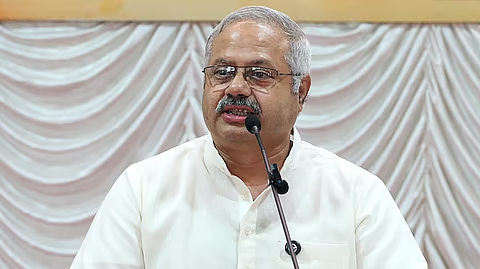
Sunil Ambekar, the chief of the Rashtriya Swayamsevak Sangh’s (RSS) publicity wing, became the third top functionary of the organization to advocate for fostering “people-to-people” connections with Pakistan, stating on Wednesday that official dialogues, whether conducted between governments, militaries, or intelligence agencies, have consistently failed to produce tangible outcomes.
Speaking to reporters at the Pune Union of Working Journalists, Ambekar moved to contextualize recent statements made by RSS chief Mohan Bhagwat and senior leader Dattatreya Hosabale. He stressed that their overtures were strictly directed at building grassroots civil society links, rather than suggesting a revival of formal state-level diplomatic engagement. “The remarks by the Sarsanghchalak were about connections among the populace. Whether or not the governments should hold formal negotiations is a matter of strategic diplomacy that involves critical national interests and numerous delicate issues,” he clarified.
Ambekar reiterated that foreign policy decisions should be deferred to the government, particularly amid conflicts or extraordinary circumstances. He urged political parties to rise above partisan differences on external affairs, channel their perspectives to the administration, and allow the government to determine the final public position in the country’s best interest.
Positioning the RSS as a socio-cultural organization, its publicity head noted that it would convey its views to the authorities whenever necessary. Elaborating on Bhagwat’s earlier stance, Ambekar observed that conventional engagement mechanisms have so far been fruitless.
“Whatever dialogue has occurred between governments, armies, and agencies has proven unsuccessful until now. Our hope in those channels has diminished… This is precisely why fostering ties at the human level is crucial,” he explained.
He emphasized that such civil-society discourse should be seen as socio-cultural engagement rather than political maneuvering, and ought to be sustained. “People-to-people dialogue is vital and must continue. It should not be misinterpreted as political diplomacy,” Ambekar asserted.
