


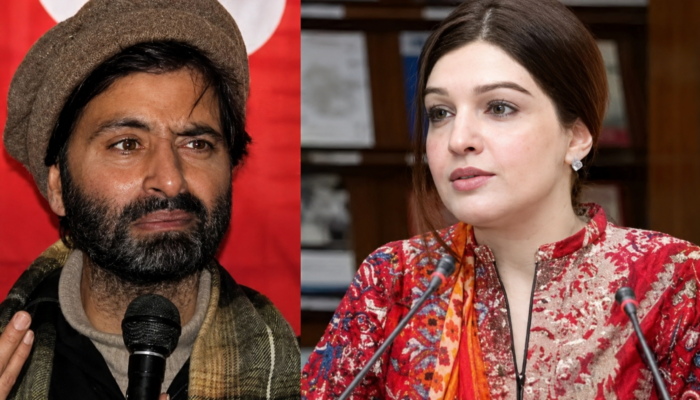
Yasin Malik, chief of the banned Jammu and Kashmir Liberation Front (JKLF) who has been incarcerated in Delhi’s Tihar Jail since 2019, has filed a 25-page affidavit before a TADA/POTA court in Jammu, formally announcing his decision to dissolve his marriage to his Pakistani wife, Mushaal Malik. The filing comes amid the ongoing hearing of a murder case against him.
Penned from Delhi’s Tihar Jail, where he is currently lodged, the affidavit is intended as a deeply personal message to his three closest family members, his mother, his wife Mushaal, and his 13-year-old daughter, Razia Sultana.
In a personal note addressed to his family that accompanied his legal submission, Malik directly appealed to his wife, expressing that he does not wish for her to endure the weight of his circumstances or live out her days as a widow.
“You are twenty years younger than me…I therefore request you to find the courage to begin a new chapter of your life with dignity and hope…I shall always love, respect and remember both of you…that before I will be hanged I have taken the decision to separate you from the bond of our Nikkah, I don’t know how I will pronounce separation from you…” said Malik, while quoting a long passage of Nelson Mandela addressed to Nomzamo.
Malik also instructed his daughter, Raziya Sultana, to ensure she calls her grandmother in Kashmir every day for a minimum of five minutes.
The submissions were filed before the Additional Sessions Judge (TADA/POTA) in Srinagar by Malik’s lawyer, Advocate Abu Adil Pandit, on September 2. The court has now set September 19, 2026, as the date for hearing the response.
Within the 25-page document, Malik articulated that he holds no grievances against either the judicial process or the prosecuting authorities. He maintained that the proceedings are rooted in political decisions and circumstances, and reiterated his belief that he has been wrongly implicated in the case.
Emphasizing that his choice was guided by “Istikhara”, the Islamic prayer for divine guidance before making a decision, he clarified that his refusal to contest the trial further should not be interpreted as an acknowledgment of guilt or an acceptance of the charges. Nevertheless, he firmly reiterated his plea for capital punishment
