

Close Menu
  • Home
  • Kashmir
  • Jammu
  • Opinion
  • Editorial
  • Podcasts
  • Videos
  • Sports
  • World
  • Art & Culture
  • Asia
Facebook X (Twitter) Instagram YouTube WhatsApp
Latest
  • Suspected Pakistani drones spotted along LoC in J&K’s Rajouri, search operation launched
  • Soz defied the whip. Shah toppled government. Now Ruhullah is walking out
  • ‘Resignation will come’, says Ruhullah; writes open letter to senior Abdullah
  • Srinagar MP Ruhullah Mehdi to resign from NC, Parliament in November
  • Counter-terrorism operations to remain top focus in Kashmir: IGP Kumar
  • Explained | What caused the devastating floods in Nepal?
  • Nepal death toll rises to 389 amid fears of new flood
  • Why is Congress still staying out of Omar Abdullah’s cabinet? Karra explains
Facebook X (Twitter) Instagram YouTube WhatsApp Threads
Kashmir OutlookKashmir Outlook
Subscribe
Sunday, August 30
  • Home
  • Kashmir
  • Jammu
  • Opinion
  • Editorial
  • Podcasts
  • Videos
  • Sports
  • World
  • Art & Culture
  • Asia
Kashmir OutlookKashmir Outlook
Home » As Wular turns toxic, women harvesters watch generations-old livelihood fade

As Wular turns toxic, women harvesters watch generations-old livelihood fade

Scientific study detects heavy metals in water chestnuts as women harvesters struggle with polluted waters, health risks and falling incomes
KNOBy KNOJuly 16, 2026 Featured 3 Mins Read
Wular lake
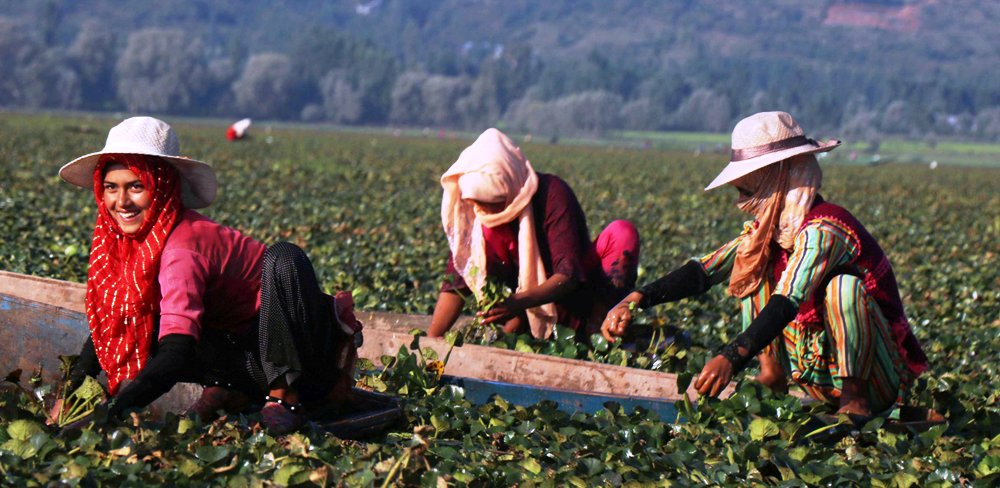
Kashmiri village women collect water chestnuts on their boats from the waters of Wular Lake at Bandipora, north of Srinagar on Wednesday, August 24, 2022.Water chestnuts are locally known as "singada" and are eaten raw, boiled or are grounded into flour after they are dried. PHOTO BY BILAL BAHADUR
Share
Facebook Twitter LinkedIn Pinterest Email

by Sajid Raina


Every morning before sunrise, dozens of women from villages surrounding Kashmir’s Wular Lake push their wooden boats into the sprawling freshwater body to harvest green water chestnuts, a seasonal occupation that has sustained their families for generations.

But this year, they say, the work has become harder, the harvest smaller and the lake itself increasingly hostile.

Standing for hours in waist-deep water, many women now wear gloves and face masks to protect themselves from what they describe as foul-smelling, polluted water that leaves their hands itching and causes skin rashes after prolonged exposure.

“In earlier years, one woman could collect over 30 kilograms of water chestnuts in a day. Now we barely manage 10 to 15 kilograms,” 45-year-old harvester Shafeeqa Begum from Lankreshipora village said.

“The water has turned dark and gives off a bad smell. Without gloves, our hands start itching. We grew up working in this lake, but now we fear entering it,” she said.

The women, who harvest the edible crop between July and September, said falling water levels, dense weed growth and deteriorating water quality have sharply reduced both the quantity and quality of the produce, cutting into the earnings of fishing households that depend on the seasonal harvest.

Another harvester, Ateeqa Bano, said spending long hours in the lake has become physically difficult.

“We spend the entire morning inside the water. Earlier it was clean and refreshing, but now there is an unpleasant smell everywhere. Many women develop skin rashes after working in the lake,” she said.

Their concerns have gained significance following a recent study published in the journal *Scientific Reports*, which detected traces of heavy metals, including cadmium, chromium, nickel, zinc and iron, in edible water chestnuts collected from Wular and other major wetlands in Kashmir.

The researchers warned that increasing pollution in freshwater wetlands could pose risks to both aquatic ecosystems and human health, and recommended continuous environmental monitoring, improved wastewater treatment and stricter pollution-control measures.

For the women who depend on the lake for their livelihood, however, the changes have been visible for years.

“We don’t need any scientific report to tell us that Wular is deteriorating,” said Shareefa Begum, another harvester. “We see the water changing every season. We smell the pollution every day and feel it on our skin. Our livelihood is disappearing before our eyes.”

The women said the shrinking harvest has made it increasingly difficult to support their families, with many returning home after hours of labour with only a fraction of what they once collected.

They also urged authorities to accelerate conservation efforts and involve local women, who spend months working inside the lake every year, in its restoration.

“We know this lake better than anyone because we live with it every day,” one of the harvesters said. “If Wular dies, our work, our income and a tradition passed down through generations will disappear with it.”

Kashmir Kashmir Outlook Pollution Trash Wular
Previous ArticleKashmir opposition likely to skip NC’s Jantar Mantar protest
Next Article Iran says 35 civilians killed in recent US attacks
KNO News agency
KNO
  • Website

Keep Reading

Soz defied the whip. Shah toppled government. Now Ruhullah is walking out

‘Resignation will come’, says Ruhullah; writes open letter to senior Abdullah

Srinagar MP Ruhullah Mehdi to resign from NC, Parliament in November

Counter-terrorism operations to remain top focus in Kashmir: IGP Kumar

Explained | What caused the devastating floods in Nepal?

Nepal death toll rises to 389 amid fears of new flood

Latest News

Suspected Pakistani drones spotted along LoC in J&K’s Rajouri, search operation launched

August 29, 2026

Soz defied the whip. Shah toppled government. Now Ruhullah is walking out

August 29, 2026

‘Resignation will come’, says Ruhullah; writes open letter to senior Abdullah

August 28, 2026

Srinagar MP Ruhullah Mehdi to resign from NC, Parliament in November

August 28, 2026
Follow Us
  • Facebook
  • Twitter
  • Instagram
  • YouTube
  • LinkedIn
  • WhatsApp
Kashmir Outlook
Facebook X (Twitter) Instagram WhatsApp YouTube
  • About Us
  • Legal Policy
  • Advertise With Us
  • Submission Policy
© 2026 Kashmir Outlook

Type above and press Enter to search. Press Esc to cancel.

Ad Blocker Enabled!
Ad Blocker Enabled!
Our website is made possible by displaying online advertisements to our visitors. Please support us by disabling your Ad Blocker.