


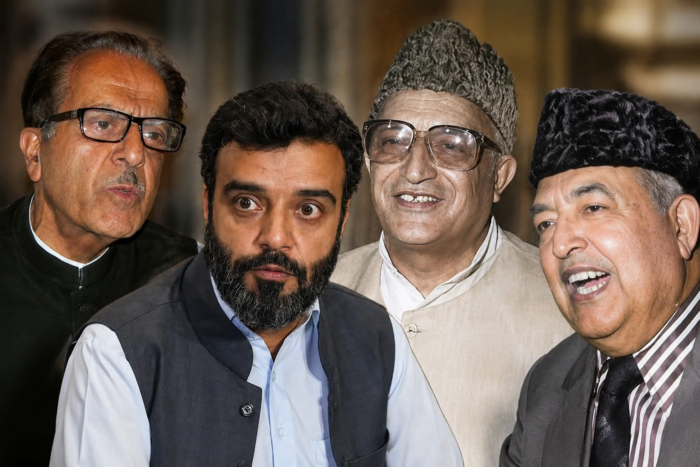
Aga Syed Ruhullah Mehdi’s decision to quit the National Conference and resign from Parliament marks the latest and potentially most consequential rupture between the Abdullah-led party and one of its prominent leaders. It revives memories of earlier rebellions that shook Jammu and Kashmir’s oldest regional political organisation.
The Srinagar MP said he would formally resign from the Lok Sabha and relinquish the primary membership of the National Conference on Nov. 3, after a prolonged dispute with the party leadership over its position on the restoration of Jammu and Kashmir’s special constitutional status.
His announcement came days after National Conference president Farooq Abdullah challenged him to resign from Parliament and seek a fresh mandate if he believed the electorate had voted for him rather than the party.
Mehdi has said his differences with the leadership are ideological, accusing the party of moving away from its commitment to seek the restoration of the constitutional protections Jammu and Kashmir enjoyed before August 2019.
While the circumstances surrounding Mehdi’s exit are distinct, the National Conference has, over the decades, witnessed some dramatic confrontations between its leadership and senior figures who challenged its political line.
Saifuddin Soz: The MP who defied Farooq Abdullah
Perhaps the closest parallel to Mehdi is Saifuddin Soz.
In April 1999, Soz was a National Conference MP when the party decided to support the confidence motion moved by then prime minister Atal Bihari Vajpayee.
Soz defied the party whip and voted against the government, which subsequently lost the confidence vote by a single vote.
Two days later, the National Conference expelled Soz from its primary membership for defying the party’s directive. Parliamentary records and contemporary reports document his expulsion following the vote, while Soz maintained that he had acted according to his political convictions.
The episode transformed Soz into one of the most prominent dissenters in the party’s history and exposed sharp differences within the National Conference over its relationship with the BJP-led government at the Centre.
More than two decades later, the similarities with Ruhullah are difficult to miss: both were sitting National Conference MPs, both publicly challenged the party’s political direction and both found themselves in a direct confrontation with Farooq Abdullah.
There is, however, one key difference. Soz was expelled by the party after defying its whip. Ruhullah has chosen to resign after months of publicly questioning the leadership’s approach and following Farooq Abdullah’s challenge that he seek a fresh mandate.
G.M. Shah and the rebellion that changed Kashmir politics
The most dramatic rupture in the National Conference’s history came in the 1980s.
Ghulam Mohammad Shah, a senior leader and Farooq Abdullah’s brother-in-law, was expelled from the party in 1983 amid growing differences with the leadership.
The split deepened the following year when Shah, backed by a group of rebel legislators, broke away from Farooq Abdullah and formed an alternative government with support from the Congress, bringing down the Farooq Abdullah government in one of the most turbulent episodes in Jammu and Kashmir’s political history.
Shah’s rebellion demonstrated the extent to which internal dissent within the National Conference could develop into a full-scale political crisis.
For decades, the 1984 revolt remained perhaps the most significant challenge from within to the Abdullah family’s control over the party.
Mirza Afzal Beg and an earlier break
An earlier major split involved Mirza Afzal Beg, one of Sheikh Abdullah’s closest political associates and among the most important figures in the movement for Jammu and Kashmir’s autonomy. He was the founding member of National Conference.
Beg and Sheikh Abdullah had been close allies for decades, but their political relationship deteriorated after differences emerged over the direction of the party following Sheikh Abdullah’s return to power in the 1970s.
Beg eventually broke away and formed a separate political platform.
Unlike the cases of Soz or Shah, Beg’s departure was the result of a political split rather than a disciplinary expulsion. Yet it remains one of the most significant examples of a senior figure breaking from the leadership of the Abdullah family.
Other departures and expulsions
The National Conference has also dealt with dissent at other levels.
In 2018, the party expelled eight leaders after they defied its decision to boycott municipal elections and filed nominations as independents.
Former Srinagar Mayor Junaid Azim Mattu also resigned from the party that year after disagreeing with its decision to boycott the urban local body elections.
In 2021, senior Jammu leaders Devender Singh Rana and Surjit Singh Slathia quit the National Conference before joining the BJP, triggering a wider exodus of party leaders in the Jammu region.
These departures, however, were political exits rather than direct parallels to the confrontations involving Soz, Shah or now Ruhullah.
Ruhullah’s resignation comes at a sensitive moment for the National Conference, which returned to power in Jammu and Kashmir after the 2024 Assembly election but has faced persistent questions over its strategy for dealing with New Delhi following the abrogation of Article 370 and the conversion of the former state into a Union territory in 2019.
The Srinagar MP has argued that the party has diluted its earlier commitment to seek the restoration of the special constitutional position of Jammu and Kashmir, while the National Conference government has focused on the restoration of statehood.
Mehdi has demanded accountability from the party leadership over what he describes as a shift in its political position, saying he will resign but wants answers to the questions he has raised before doing so.
His planned exit on Nov. 3 will therefore add another name to the National Conference’s long history of high-profile dissenters.
From Mirza Afzal Beg’s political break with Sheikh Abdullah to G.M. Shah’s rebellion against Farooq Abdullah, and from Saifuddin Soz’s defiance in Parliament to Ruhullah Mehdi’s latest confrontation, the party has periodically faced challenges not just from its rivals but from leaders who once stood within its own ranks.
Whether Ruhullah’s resignation remains an individual act of dissent or develops into a wider political challenge for the National Conference will now be closely watched in Jammu and Kashmir.
