


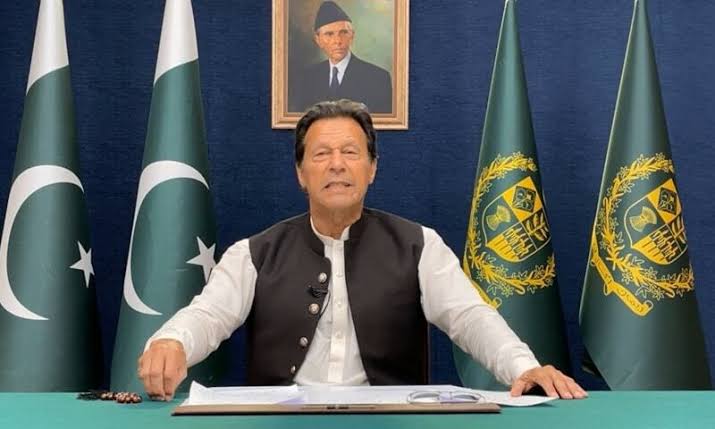
Pakistan journalist Wajahat Saeed Khan sent shockwaves through Pakistan by reporting that former Prime Minister Imran Khan had passed away while in military custody, citing a single unnamed source from the Army’s General Headquarters. However, he quickly walked back that assertion, clarifying that the report was never actually confirmed.
The initial speculation emerged from a two-part series Wajahat published on August 11, titled “Is Khan still with us” and “What happens after Khan.” In his follow-up video clarification, the journalist drew a sharp line between what his sources explicitly confirmed and the broader fears that had permeated his earlier coverage.
Wajahat detailed that three senior officers within the Pakistan Army, based at the Rawalpindi headquarters and spanning the General Staff, Military Intelligence, and C4I directorates, along with a junior commissioned officer, never validated Khan’s death. Instead, they conveyed an intense, paralyzing anxiety regarding the former PM’s fate, describing a “profound paralysing fear that the worst may have happened or is likely to happen,” coupled with an extraordinary, unprecedented level of secrecy surrounding his imprisonment.
Rather than a definitive scoop, Wajahat repositioned his original reporting as a deliberate provocation. He stated his goal was to shake the authorities into providing tangible “proof of life” for Imran Khan, thereby using the controversy as leverage to force official transparency.
Pakistani commentator Moeed Ahmed weighed in, suggesting the move could be a calculated push by certain generals directed at the army chief to end Khan’s isolation. Ahmed noted Wajahat’s direct access to the Director General of the Corps (DGC) and other high-ranking officers, highlighting a prior exclusive story regarding the management of Imran Riaz Khan’s abduction.
Wajahat painted a grim picture of the current military environment, describing the institution as “uncharacteristically, terrifyingly and chillingly silent.” He added that the crackdown is not just external; the army is aggressively monitoring and silencing its own ranks.
According to his account, the entire operation is being run by a very small, tight-knit group of intelligence operatives who answer exclusively to the army chief (referred to as Field Marshal in his statement), leaving the rest of the military establishment feeling terrified and paranoid.
