


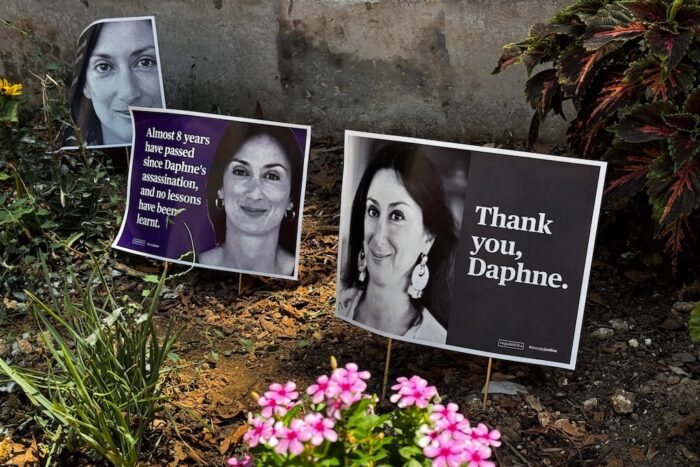
The most troubling part of the murder of Daphne Caruana Galizia is not only that she was killed in a European Union country. It is that, almost nine years later, the question of who ordered her murder is still not fully answered. Yorgen Fenech, the Maltese businessman accused of being involved in planning the assassination, was acquitted by a jury in September 2026. Three men have been convicted of carrying out the bombing, while two others were convicted of supplying the bomb. But the person accused of being behind the murder has now walked free.
Fenech’s acquittal does not mean that he was proven innocent. It means that the prosecution failed to prove his guilt beyond reasonable doubt, which is the legal standard in a criminal trial. This distinction is important. But the case still raises a difficult question: what happens when the people who may have planned or enabled the murder of a journalist are never brought to justice?
Daphne Caruana Galizia was investigating corruption, political influence and business dealings when a bomb planted in her car killed her in October 2017. She had received threats for years and faced strong pressure because of her journalism.
A public inquiry in Malta later found that the state had failed to protect her properly. The inquiry said that the state had created an atmosphere in which people could act with a sense of impunity. This is an important finding. A government does not have to order the killing of a journalist to fail that journalist. It can also fail through inaction, weak institutions, political protection and a failure to take threats seriously.
Several people have already been convicted in the case. Vincent Muscat pleaded guilty and was sentenced to 15 years in prison. George and Alfred Degiorgio later admitted their roles and were each sentenced to 40 years. In June 2025, Robert Agius and Jamie Vella were sentenced to life imprisonment after being convicted of supplying the bomb used in the murder.
But the bigger question remained: who ordered the killing? Keith Schembri, the former chief of staff to Prime Minister Joseph Muscat, has often been discussed in connection with the case. Caruana Galizia had investigated corruption allegations involving people close to the government. Fenech’s defence also argued that Schembri had a stronger motive for the murder. Schembri has denied involvement and has never been charged in connection with the assassination.
The trial also showed how difficult it can be to establish the truth when witnesses give different accounts. During the proceedings, several witnesses gave conflicting versions of important events. MaltaToday reported that some witnesses appeared to disagree about meetings, conversations and what certain people had done.
This issue has become even more important after Fenech’s acquittal. On 5 September 2026, MaltaToday reported that Therese Comodini Cachia, the lawyer representing the Caruana Galizia family, said allegations that witnesses in the trial may have been influenced or paid should be investigated. She said the possibility of witness tampering could not be ruled out. At the same time, she stressed that public suspicion and legal findings are not the same thing and that such claims must be examined through proper investigations and court proceedings.
This does not prove that witnesses were influenced or that anyone committed a crime. But it raises another important question about the case: were all the witnesses and their evidence properly examined?
The court has already taken one important step. After the trial, it ordered that witness testimony heard during the case be passed to the police so that investigators could consider whether other people might face criminal proceedings.
The Fenech verdict therefore may not be the end of the story. The prosecution is also considering whether it can appeal the acquittal. However, an appeal against an acquittal is legally difficult and does not automatically mean that Fenech will be tried again.
The Maltese case is important beyond Malta because it shows the dangers faced by journalists who investigate powerful people.
Journalists do not work only in war zones. They can also face serious risks in democratic countries. Governments, political groups, criminal organisations and wealthy individuals can put pressure on journalists. Reporters can be threatened, sued, watched, attacked or, in the worst cases, killed.
Caruana Galizia experienced many of these pressures before her death. In 2021, the Committee to Protect Journalists reported that she had received many death threats and was facing 47 defamation cases or lawsuits known as SLAPPs when she was killed.
These threats did not automatically lead to her murder. But they showed that she was working in an increasingly dangerous environment. The failure to respond properly to such threats can create the conditions in which violence becomes easier.
The problem is not limited to Malta. In February 2026, the Committee to Protect Journalists reported that 129 journalists and media workers were killed around the world in 2025, the highest annual number in its records. More than three quarters were killed in conflict areas, while 47 cases were classified as targeted killings. At the time of the report, none of those targeted killings had resulted in accountability.
These numbers show a serious problem. Journalists often take the risks, while those who attack them may believe that they will never be punished.
Protecting journalists therefore cannot begin only after a murder. Governments need independent systems for investigating threats and crimes against journalists. Police forces should have investigators who understand attacks on the media. Courts should be able to deal with cases without political pressure. Journalists who face serious threats should also have access to legal, physical and digital security.
News organisations have responsibilities too. Freelance journalists, who often work without the protection available to large news organisations, need better legal and security support.
There is also a wider lesson from the Malta case. A free press is not simply about journalists being allowed to write. It is also about whether they can investigate without being threatened into silence.
The killing of Daphne Caruana Galizia showed what can happen when threats against journalists are allowed to continue for years. Her death also showed that catching the people who physically carry out a murder may not be enough. Society also needs to know whether anyone planned, ordered, financed or protected the crime.
The latest allegations about possible witness influence should therefore be treated carefully. They should not become another source of political speculation. But they should also not be ignored. If there are credible reasons to believe that witnesses were influenced or paid, the proper response is an independent investigation.
The deepest lesson from Malta is simple: justice is not complete when only some of the people involved in a crime are punished. The truth must also be pursued wherever the evidence leads.
Daphne Caruana Galizia was killed because she was a journalist doing difficult and uncomfortable work. A healthy democracy, anywhere, must make sure that journalists can do that work without fear. And when a journalist is murdered, justice must continue until every reasonable question has been properly examined.
NOTE: Views expressed in this opinion are authors’ own and may not be found in accord with those of Kashmir Outlook
