


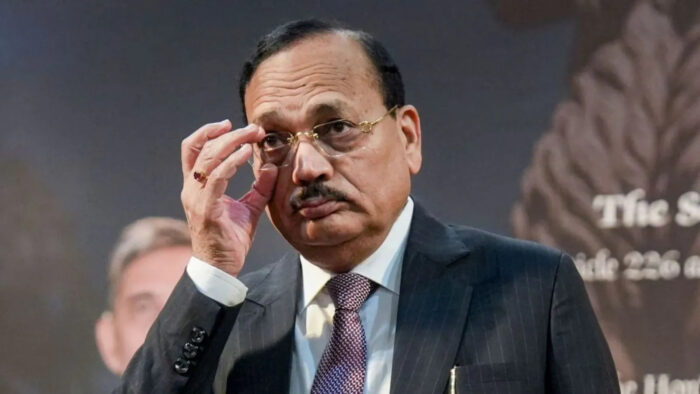
India’s Supreme Court on Friday barred the unauthorised extraction, editing, uploading, sharing and monetisation of audio and video recordings of court proceedings on social media and other digital platforms, saying prior approval from the concerned court would be mandatory.
A bench headed by Chief Justice Surya Kant issued the interim direction while hearing a public interest litigation seeking safeguards against the misuse of courtroom recordings through selective editing and circulation on digital platforms.
The court said no person or entity shall extract, modify, disseminate, post, repost, upload or monetise audio or video recordings of judicial proceedings without prior permission from the Registrar General of the concerned High Court or the Secretary General of the Supreme Court.
The bench clarified that the interim order would not restrict news reporting of judicial proceedings.
The petition, filed by journalist Harshita Grover, argued that selective and decontextualised clips of court hearings circulating online were undermining the dignity of courts and eroding public confidence in the justice system.
The Supreme Court issued notices to all High Courts, directing them to submit reports on the implementation of livestreaming guidelines and the impact of continuous livestreaming of court proceedings. It also asked the federal government to identify the ministries that could implement the reliefs sought in the petition.
Notices were also issued to social media platforms, including Meta and X.
During the hearing, senior advocate Vikas Singh, appearing for the petitioner, said he did not oppose livestreaming of court proceedings but objected to edited clips being circulated without context, arguing that such content distorted judicial proceedings.
Justice Joymalya Bagchi said regulating digital data had become a major challenge and suggested livestreaming of court proceedings should be an exception rather than the norm, adding that unrestricted online access risked misuse.
Solicitor General Tushar Mehta backed the plea for interim protection, warning that advances in artificial intelligence could allow manipulated courtroom videos to falsely depict judges and lawyers while retaining authentic facial movements and voices.
Chief Justice Kant also expressed concern over inaccurate reporting of judicial proceedings, saying remarks made during hearings were sometimes taken out of context and misrepresented.
The matter remains pending before the Supreme Court.
