


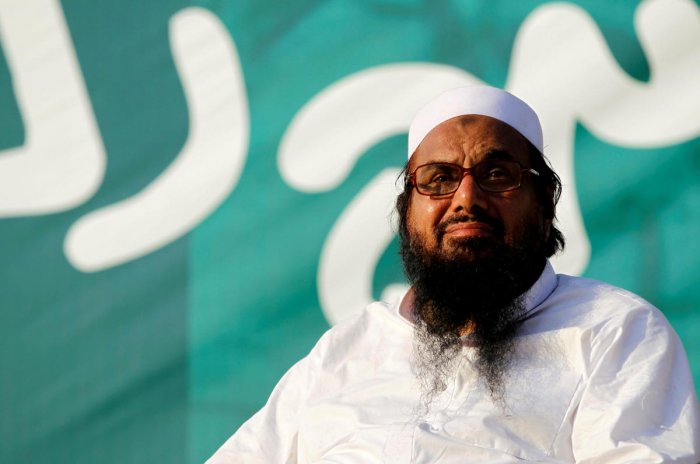
A court in Jammu has ordered the issuance of a non-bailable warrant against Hafiz Saeed, the chief of the proscribed terror outfit Lashkar-e-Taiba (LeT). This action follows the National Investigation Agency (NIA) naming the Pakistan-based militant leader as the principal conspirator in a supplementary chargesheet submitted earlier this month.
According to investigative sources, Saeed, who is believed to be sheltered by Pakistan’s military establishment, will face legal proceedings without being physically present in court.
The charges stem from one of the deadliest militant strikes in Jammu and Kashmir since the 2019 Uri garrison attack. Last April, Pahalgam witnessed the massacre of 26 individuals, the vast majority of whom were civilians.
The NIA’s latest chargesheet elaborates on Saeed’s direct involvement in orchestrating and overseeing the Pahalgam operation, bolstered by new forensic evidence retrieved from the scene of the crime. The agency had previously filed its initial chargesheet in December 2025, which named the three perpetrators who physically carried out the assault. Those individuals were neutralized in July 2025 during Operation Mahadev, a coordinated offensive involving the Army, CRPF, and state police. Union Home Minister Amit Shah later informed Parliament of their elimination, identifying one of them, Suleiman, as a top-tier LeT commander who was attempting to flee back to Pakistan.
Intelligence sources indicate that the warrant against Saeed, who was also the architect behind the 2008 Mumbai terror siege that left 166 dead, clears the path for an in-absentia trial. The NIA has asserted that producing Saeed in person is impossible due to the protection afforded to him by Pakistani authorities, prompting the agency to request that the court proceed without him.
The standard legal protocol involves first serving summons and warrants to compel attendance; if the accused continues to disregard these orders, they can be declared an absconder or fugitive, after which the court may initiate trial proceedings.
The NIA has informed the court that virtually every diplomatic and legal channel to secure Saeed’s extradition to India has been exhausted. Consequently, the agency argues that invoking the new law is essential to ensure that the judicial process does not remain stalled.
