


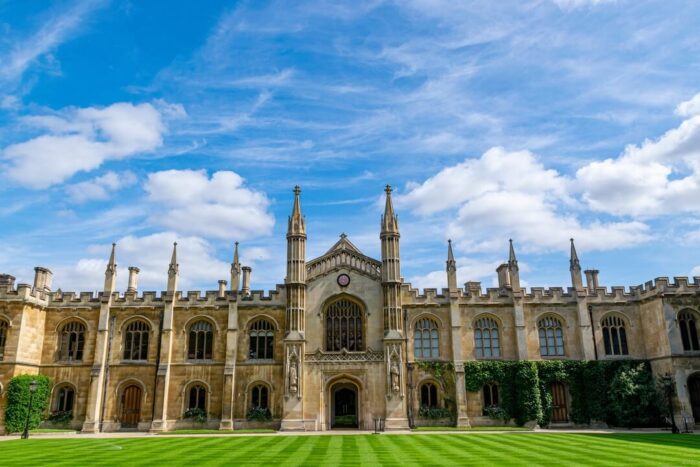
Human beings and their societies established universities and institutions of higher learning to challenge orthodox knowledge, advance new discoveries, and overcome the pressing challenges of their time. Social, economic, and political necessities, along with human curiosity, formed the foundations upon which these centers of higher learning were built. They were designed to produce knowledge and skills tailored to the specific needs of their people, places, and historical contexts.
The production of new, secular, and scientific knowledge has frequently challenged both ruling and non-ruling elites. It has called into question reactionary traditional and religious values and exposed the blind beliefs prevalent across different societies worldwide. At its core, the pursuit of secular and scientific knowledge—achieved by questioning established doctrines and power structures—has been central to deepening democratization and promoting the decolonization of minds and the body politic.
In their daily operations, universities have pursued the twin objectives of education for essence (self-realisation with everyday needs ) and education for emancipation (social, economic and political liberation from conditions of feudalism, patriarchy, colonialism, capitalism and imperialism, conditions of poverty, exploitation and inequalities ). Students and staff engage in producing knowledge and skills that are essential not only for individual flourishing but also for societal progress. Simultaneously, they cultivate radical ideas that generate critical consciousness, enabling people to overcome predatory ideologies perpetuated by religious and governing elites. Thus, universities function as open spaces for creating, developing, and disseminating knowledge to empower people and their societies. The freedoms to learn, read, research, teach, write, publish, and reject or advance diverse ideas are crucial activities. These freedoms shape young minds, steer the state and societies toward scientific progress, and ultimately threaten the dominance of all ruling and non ruling elites.
Collective foundation, collective purpose, and collective search for new knowledge are the three core tenets of every university and institution of higher learning. There can be no individual pursuit of knowledge without its collective foundations, whether it is in the natural sciences, social sciences, or humanities. However, this collective foundation—and the institutions that produce knowledge—has begun to erode. With the growth of institutions established by religious denominations, monasteries. private corporations, and their funding agencies, and as states and governments have increasingly shaped universities, research, researchers, and the research environment have been domesticated to serve the interests of governing elites.
The marketisation of research, education, learning, and teaching delivers the final blow to the idea of the university as a free space for producing ideas, skills, and knowledge with a genuine social purpose. The rise and consolidation of managerialism in higher education has sealed the fate—and the very purpose—of higher education. The majority of universities now function as teaching factories, disseminating more information than producing new ideas and skills for the greater social good. There is a lack of research-led teaching and of teachers who practice it, alongside a deficit of critical curricula capable of developing critical scholars and citizens who can question power to bring about emancipatory social and political transformation. Mickey-Mouse employability schemes and hubs have replaced the critical skills essential for innovation in the workplace and in life. This profit-seeking marketisation and managerialism has ruined higher education, where profit now overrides the true purpose of education, learning, and teaching. Moreover, marketisation and managerialism are central to the commodification of education—reducing it to a product sold for profit at the expense of people and the planet.
Such standardisation of higher education has led managers to create a culture of compliance tailored to the needs and requirements of the ruling and non ruling elites. There is no space for questioning within standardised and compliant practices, carried out in the name of quality control, which ultimately serves as a means of domesticating higher education in the name of pursuing ‘self’ learning’ and ‘quality control’. Self learning is no learning. One only learns with peers which makes learning a collective activity and create collective foundations of knowledge that the managers are working overtime to dismantle it.
The managers, who have never taught a class or written a page of research, now preach about quality teaching and quality research. In reality, this translates into running a standardised product—a standardised curriculum—like a machine. It lacks creativity, innovation, and any radical teaching or learning approach that promotes critical thinking, which is essential for producing new knowledge to overcome the multiple crises confronting contemporary societies worldwide. People are made to believe in education for employability, yet the tick-box exercise of employability and its standardisation actively destroys the critical skills necessary for new discoveries and innovation with a social purpose—skills that enable individuals and their communities to flourish.
Vice Chancellors, their deputies, associates anad assistants, principals, deans, and heads of departments have become predatory managers, sucking the remaining life and blood out of educational systems. These overpaid visionless predators can award themselves professorial titles and inflate the volume and size of their salaries and bonuses, yet they lack any credentials to lead higher education toward a social, political, and economic purpose of change and transformation—one that upholds individual freedom and dignity while promoting democratic, diverse, decolonial and decarbonised knowledge traditions that questions every form of domination and its praxis.
These predatory managers of higher education are agents of both ruling and non ruling elites, working overtime to destroy higher education and its collective foundations in their pursuit of profit, operating universities and institutions of higher learning like sausage factories. These anti social, arrogant managers, along with their culture of marketisation, managerialism, and standardisation of education, need to be exposed and defeated. This is a basic necessity for the survival of universities and their collective foundations, so that they can once again produce and disseminate new knowledge in pursuit of peace, progress, and prosperity of human civilisation, the animal world, and the planet.
Therefore, the present crisis facing universities and institutions of higher learning has a longer history, and it can be resolved only if we understand the roots of these crises confronting teachers and students in their endeavour to produce and disseminate new knowledge with social purpose. Addressing the symptoms will not work and will not change anything; it would provide only temporary relief which continues the slow death of universities.
The only way to revive the idea of the university is to revive the collective foundations of education and knowledge, where freedom to read, research, and write without any form of control is central to producing new knowledge. The market, the state, governments, corporations, religious forces, and their managers should not decide the nature and character of higher education or its everyday operations within and beyond universities. There is absolutely no doubt in my mind that higher education and its collective foundations will flourish if working people can fight for a collective foundation of educational system. This is the only short-term and long-term solution. There is no other alternative to rely upon. Collective education, a collective educational system, and collective knowledge for a collective purpose: that is the only alternative.
