


by Amanjeet Singh
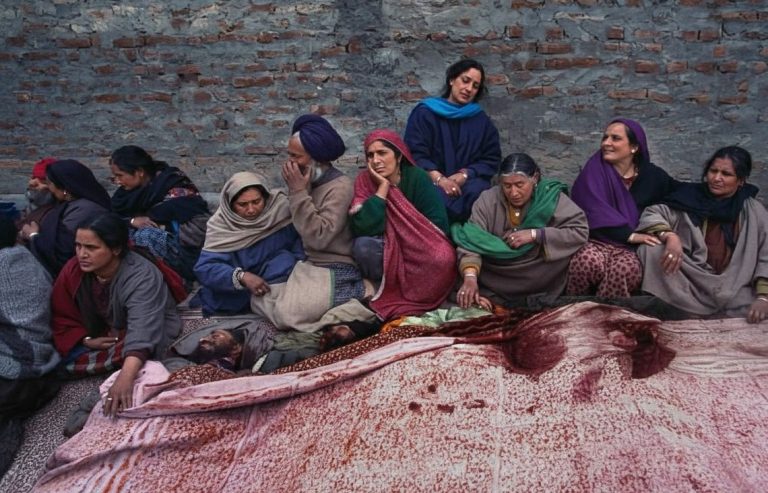
20 March remains a day of deep mourning in the collective memory of Kashmir’s Sikh community. It recalls the heartbreaking events of 20 March 2000, when 35 innocent Sikh men of Chittisinghpora village in Anantnag district were killed in a brutal act of violence that shook the conscience of the entire region. More than two decades later, the pain of that night still lingers, not only in the homes of those who lost fathers, sons, brothers, and husbands, but also in the wider history of Kashmir.
Chittisinghpura was known as a peaceful village where Sikh families had lived for generations with strong ties to the land, their faith, and their neighbours. Life moved with simplicity and dignity. Fields, orchards, and shared social bonds shaped the rhythm of daily existence. That calm was shattered in a single evening when armed men entered the village and turned an atmosphere of trust into one of terror.
The victims had gathered after celebrating Hola Mohalla, a festival marked by spirit, devotion, and community. Instead of returning to the comfort of ordinary life, many families were pushed into a nightmare from which they never fully recovered. Men were separated, lined up, and shot at close range. In a matter of moments, an entire community was thrown into grief. The killings did not only take lives; they left behind a wound that has remained open through the years.
For the survivors and the families of those killed, remembrance is not limited to a date on the calendar. It is tied to voices that never returned, empty spaces at family gatherings, and memories too painful to forget. Children grew up without fathers. Mothers and widows carried the burden of loss in silence. The trauma of that night became part of everyday life, passed from one generation to the next as both pain and testimony.
The massacre also marked a turning point for Kashmiri Sikhs. It created fear, uncertainty, and a sense of vulnerability in a community that had long considered itself woven into the valley’s social fabric. Some families left in search of safety and stability elsewhere. Others remained, determined not to let terror uproot them from their homeland. Their decision to stay was itself an act of courage.
Even in the face of such tragedy, the Sikh community of Kashmir did not surrender its humanity. Across villages and towns, Sikh families continued to live with resilience, preserving bonds with their Muslim neighbours and maintaining the shared traditions of coexistence that have long defined the valley. In times of celebration and hardship alike, these relationships have offered strength and hope. They stand as a reminder that violence may wound society, but it does not have to destroy its moral foundation.
Yet remembrance must also carry responsibility. The passage of time should not weaken the demand for truth, justice, and dignity. More painfully, even after 26 years, justice remains incomplete and unanswered questions continue to haunt the families of the victims. The report of the Justice S. R. Pandian Commission, which was constituted to investigate the massacre, was submitted to the government, but its findings have still not been made public. This continued silence has only deepened suspicion, anguish, and the feeling that the truth has been buried rather than revealed.
For the families who have waited year after year, this delay is not merely administrative; it is a denial of closure. Justice delayed for so long becomes justice denied in the eyes of those who continue to live with loss. The demand to make the report public is, therefore, not just a political demand but a moral one. It is necessary to restore faith, acknowledge suffering, and show that the lives lost at Chittisinghpora are not forgotten by the institutions meant to protect justice and truth.
The families who suffered deserve more than ceremonial sympathy. They deserve recognition, support, and a sincere effort to address the concerns of a minority community that continues to seek security, representation, and equal opportunity. Memorials and anniversaries matter, but they must be matched by meaningful inclusion, transparency, and compassionate governance
Chittisinghpora is not only a symbol of grief; it is also a lesson for the future. It reminds us that the suffering of minorities must never be ignored, that human lives must never become footnotes in larger political narratives, and that true peace depends on fairness, trust, and remembrance. To honour the victims is to uphold the values that hatred tried to destroy and to continue demanding that truth be spoken, accountability ensured, and justice finally delivered.
As lamps are lit and prayers are offered on 20 March, Kashmir bows its head before the memory of the 35 men who were taken too soon. Their names may be spoken softly, but their absence is immense. Their memory lives on in the tears of families, in the conscience of the valley, and in the hope that such darkness will never return.
Chittisinghpura will always be remembered not only for the tragedy it endured, but for the quiet strength, dignity, and endurance of its people.
The author can be mailed at 1988amanjeetsingh@gmail.com
