


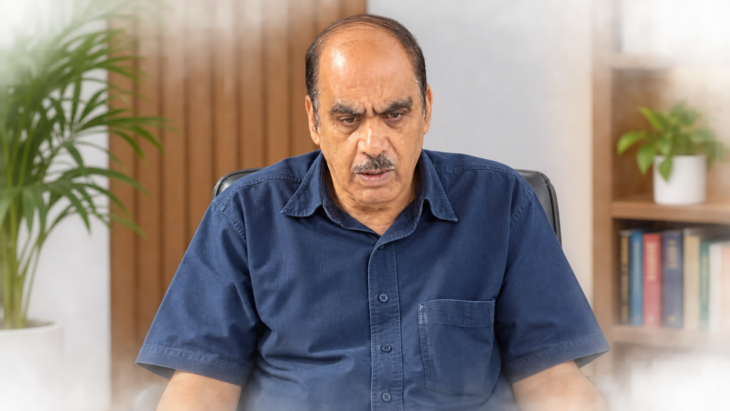
Jammu and Kashmir National Conference MLA Saif-ud-Din Bhat, who represents the Khan Sahib Assembly constituency, is set to seek permission to introduce a private member’s bill proposing a regulatory framework for digital news publishers and social media news channels operating in or from the Union territory.
The proposed legislation, listed as L.A. Private Members’ Bill No. 62 of 2026, seeks to provide for the registration, recognition, accreditation and “responsible functioning” of digital news publishers and social media news channels.
The bill proposes a technology-enabled framework aimed at increasing transparency over ownership and editorial responsibility.
It also seeks to establish mechanisms for real-time media monitoring and fact-checking and to facilitate access to official information and accreditation for bona fide media professionals.
Another provision envisages a grievance-redressal mechanism and “appropriate action” against the deliberate and repeated unlawful dissemination of false information.
The bill comes against the backdrop of growing debate in India over how digital news and social media should be regulated, particularly as traditional news organisations and independent digital publishers increasingly operate across websites, social media platforms and video channels.
The Jammu and Kashmir government has also said that its draft New Media Policy-2026 contains proposed provisions for a regulatory framework covering new and social media, along with print media.
The government said in February that the draft was undergoing inter-departmental consultation. Its Directorate of Information and Public Relations has a dedicated cell that monitors alleged fake or misleading news and issues rebuttals.
However, the bill’s stated objectives do not by themselves establish how terms such as “false information”, “deliberate”, “repeated” or “responsible functioning” would ultimately be defined, nor do they specify in the listed text what authority would make final determinations or what safeguards would apply before action is taken.
Those details could become important during consideration of the legislation because regulation of news content directly intersects with freedom of speech and freedom of the press.
Concerns over government role in regulating news
Similar questions have been raised during India’s wider debate over digital-media regulation.
The Information Technology (Intermediary Guidelines and Digital Media Ethics Code) Rules, 2021 created a framework for online publishers of news and current affairs, including a three-tier grievance mechanism. The rules have faced criticism over the role of executive authorities in oversight of digital news.
PRS Legislative Research has noted concerns that regulation of online publishers could raise questions about freedom of speech and whether the IT Act provides the legal basis for such regulation.
It has also contrasted the government oversight mechanism for digital news with the Press Council of India’s statutory and independent structure for print media.
More recently, Human Rights Watch raised concerns about proposed 2026 amendments to India’s digital-media rules, arguing that expanded government control over online content could encourage self-censorship.
It also cited earlier court proceedings involving the government’s proposed fact-checking mechanism and the digital-news oversight framework.
The Madras High Court has previously questioned whether government oversight of media could affect media independence, according to Human Rights Watch’s account of the litigation.
At the same time, concerns over misinformation are not limited to governments. A parliamentary standing committee in 2025 noted that “fake news” was not defined under existing law and recommended exploring an independent body to adjudicate cross-platform fake-news cases and recommend penalties.
This reflects the central challenge for any such framework: establishing mechanisms to address demonstrably unlawful misinformation while ensuring that regulatory powers do not become a means of deciding legitimate journalistic disagreements or suppressing criticism.
Particular sensitivity in J&K
The question carries particular significance in Jammu and Kashmir, where the government has previously faced scrutiny over media policies involving monitoring of news content and accreditation.
The J&K Media Policy introduced in 2020 gave the Information Department a role in examining media content for alleged fake news, plagiarism and unethical or anti-national activities.
The policy also provided for coordination with security agencies in certain cases. The provisions drew criticism over the extent of government involvement in determining what constituted problematic reporting.
The proposed bill by Bhat does not, in the text listed for introduction, itself establish the detailed enforcement machinery that would determine how such powers would operate.
That could become a major area of discussion if the bill is introduced and taken up for debate in the Assembly.
The broader issue is also complicated by the changing nature of journalism in Kashmir.
Digital-only publishers, YouTube channels and social-media news pages can now reach audiences comparable to traditional news organisations, while there is no dedicated statutory registration system for digital-only news portals comparable to the registration framework applicable to newspapers and periodicals.
For supporters of regulation, a formal framework could potentially improve transparency, professional accreditation and accountability among digital publishers.
For critics, the key questions are likely to be who regulates the regulators, how “false information” is defined, whether independent journalists and smaller publishers receive equal treatment, and what appeal or judicial safeguards exist against regulatory action.
Bhat is scheduled to introduce the bill in the Jammu and Kashmir Legislative Assembly on Monday. Its introduction would be only the first stage of the legislative process, and the final provisions could change if the House considers and amends the proposal.
