
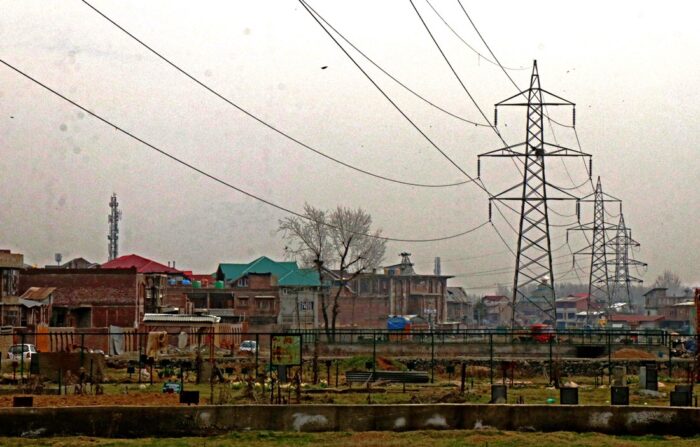
Electricity consumers in Jammu and Kashmir will pay higher tariffs from September 1 after the Joint Electricity Regulatory Commission (JERC) approved an average 6.83% increase for the 2026-27 financial year, adding to political pressure on the regional government over its unfulfilled promise of 200 units of free electricity.
The revised tariffs will apply to bills for electricity consumed from September 1, according to an order issued by the regulator.
The commission said the tariff increase was necessary to partially address a revenue gap faced by Jammu Power Distribution Corporation Ltd (JPDCL) and Kashmir Power Distribution Corporation Ltd (KPDCL), but limited the increase to avoid a sharp rise in consumer bills.
The two distribution companies had sought a 5% across-the-board increase in their tariff proposals.
JERC said the combined annual revenue requirement of the two companies, after its prudence check, stood at Rs 10,275.72 crore, against projected revenue of Rs 7,352.87 crore at existing tariffs, leaving a gap of Rs 2,922.85 crore.
“If this entire gap was to be met through tariff alone, the hike would have been around 40%,” the commission said, adding that such an increase would have resulted in a “tariff shock” for consumers.
The regulator factored in Rs 2,420.78 crore in financial support committed by the Jammu and Kashmir government as subsidy under Section 65 of the Electricity Act, 2003.
With the revised tariff, revenue from consumers is expected to rise to Rs 7,854.94 crore, while the remaining gap of Rs 2,420.78 crore will be met through government grant-in-aid, according to the order.
The decision drew criticism from opposition leaders, who said the tariff increase contradicted the government’s earlier promise to provide 200 units of free electricity.
Jammu and Kashmir People’s Conference chief and MLA Handwara Sajad Lone said consumers were being asked to pay more despite waiting nearly two years for the promised benefit.
“People in Jammu and Kashmir will now have to pay more from their pockets for electricity,” Lone said in a post on X, arguing that the 6.83% increase was a shock for consumers who had been promised 200 units of free electricity.
Lone also alleged that increased load allocations in non-metered areas had contributed to higher monthly bills.
In a separate post, Lone said Chief Minister Omar Abdullah, who also holds the power portfolio, had approved the Power Development Department’s proposal for a 5% tariff increase before JERC ultimately approved a higher 6.83% increase.
He said the tariff decision would impose an additional burden of more than Rs 500 crore on consumers.
Peoples Democratic Party leader and MLA Pulwama Waheed Ur Rehman Para also criticised the increase, saying it came at a time when unemployment and inflation were putting pressure on households.
“The government imposed a 6.83% power tariff hike,” Para said, questioning the gap between the government’s election promises of 200 units of free electricity, free gas and free ration and the latest increase in power bills.
The tariff decision comes as Jammu and Kashmir’s power distribution companies continue to face a substantial gap between the cost of supplying electricity and revenue collected from consumers.
The regulator’s decision seeks to distribute that burden between consumers and government support rather than recover the entire deficit through tariffs.
