


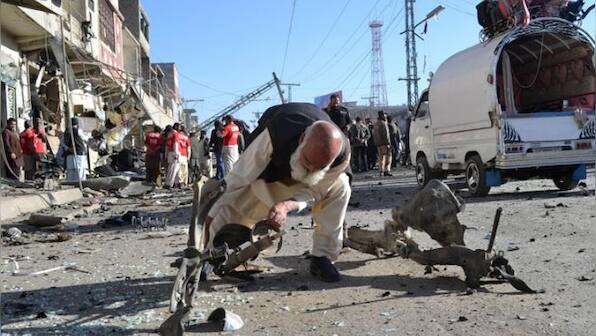
A harsh government crackdown in Pakistan-administered Kashmir has reportedly left at least 30 civilians dead over the past 48 hours, according to activist groups, as weeks of turmoil continue to roil the disputed territory.
The Joint Awami Action Committee (JAAC), a local civil society organization, alleges that security personnel opened fire on large crowds of nonviolent demonstrators, killing 25 people on Monday and an additional five on Tuesday.
The unrest, which first erupted in June, has prompted Islamabad to impose a stringent communications lockdown across the region, including a total internet blackout severing it from the rest of Pakistan, alongside mass arrests. In response, Amnesty International called on Pakistani authorities on Tuesday to lift the blockade.
Protesters and their supporters have taken to the streets to demand electoral reforms in the territory. Monday’s rally marked the initial phase of a contested election cycle; local groups argue that the system of reserved parliamentary seats for refugees who now reside in Pakistan grants external factions disproportionate sway over regional affairs.
Pakistani officials have denied any state involvement in the deaths of civilian protesters. During a press conference over the weekend, Information Minister Atta Tarar alleged that the demonstrations in Pakistan-administered Kashmir were receiving “funds and instructions” from India.
JAAC spokesperson Khan rejected these accusations of Indian sponsorship, stating: “It is nothing new: people asking for political or economic rights are termed India-sponsored or anti-state in Pakistan.”
The protests, spearheaded by JAAC, have persisted for roughly a year, demanding political and economic entitlements for local inhabitants as well as thorough electoral reform.
Approximately 40 people were reportedly killed when violence first erupted in June, with the government alleging that protesters murdered police officers. In retaliation, the local administration proscribed JAAC as a terrorist organization, carried out mass arrests of its political workers, and responded to rallies with heavy-handed force.
The escalating bloodshed prompted UN Human Rights Chief Volker Türk to call for an inquiry into the deadly violence.
Isabelle Lassée, Amnesty International’s Regional Director for South Asia, said: “The disturbing reports emerging from Rawalakot are consistent with the Pakistani authorities’ long history of unlawful violence against protesters. A prompt, independent, and transparent investigation must be ordered into the security forces’ use of force against protesters.”
She further warned that the sustained internet and mobile services blackout severely obstructs independent verification of the ground situation, urging Pakistani authorities to restore all communications access and permit media and independent observers into the area.
