


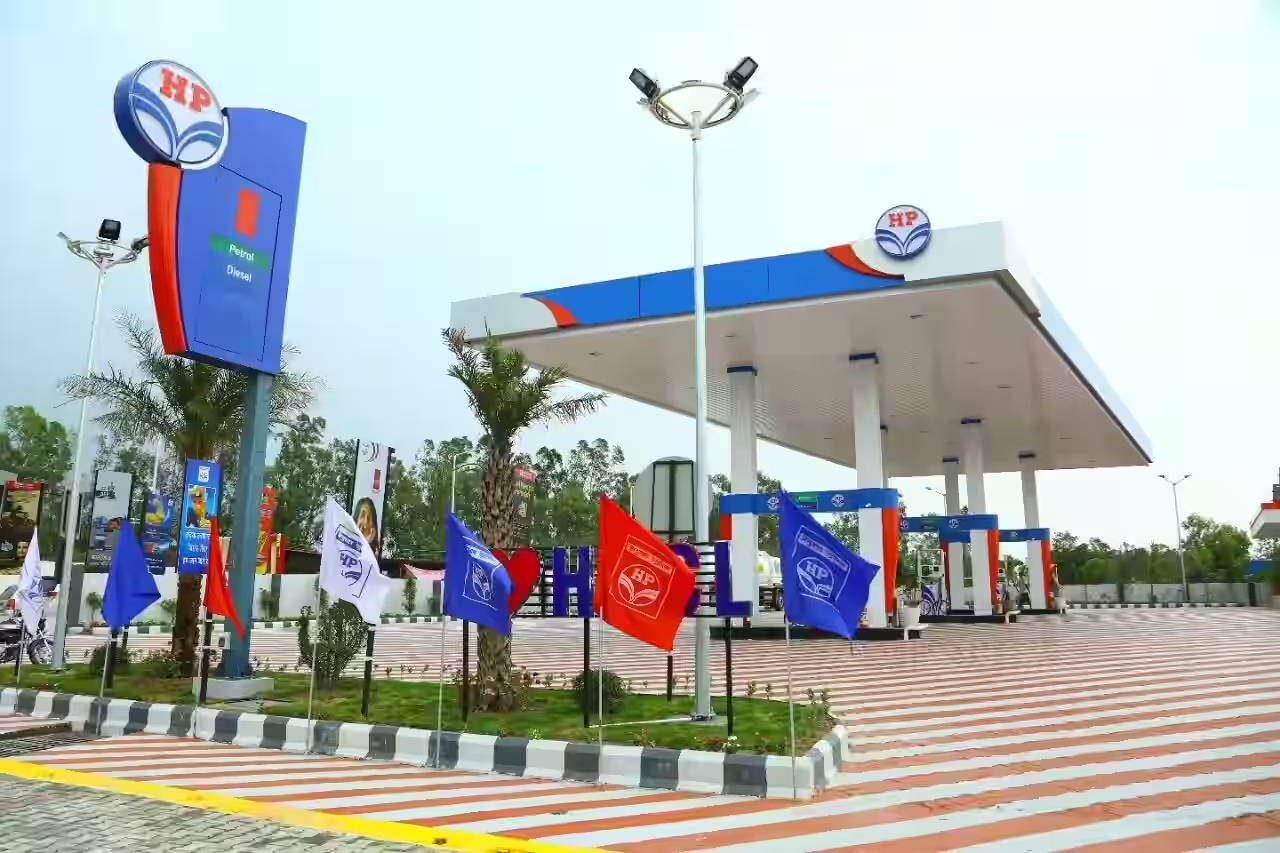
Citing geopolitical tensions and potential disruptions to global petroleum supply chains, the government has banned industrial, commercial, and institutional users from purchasing petrol and diesel at retail fuel pumps, while also limiting diesel sales to 200 litres per customer or vehicle per day.
The move follows an unusual surge in fuel demand, especially for diesel, in certain areas. This spike occurred because bulk consumers had shifted to buying from retail petrol pumps, attracted by lower prices. In Delhi, for example, diesel at retail pumps costs ₹95.20 per litre, compared to ₹134.50 per litre for bulk purchases.
This price gap arose because state-owned oil companies kept retail fuel prices artificially low to protect ordinary citizens from the sharp rise in global oil prices following the Middle East crisis in late February. While bulk users—such as telecom towers and industries using diesel for power generation or as feedstock, pay market rates, retail pump prices are significantly below cost.
On June 11, 2026, the Ministry of Petroleum and Natural Gas issued the Motor Spirit and High Speed Diesel (Temporary Regulation of Supply through Retail Outlets) Order, 2026, which directs fuel retailers and oil marketing companies to prevent bulk purchases from retail outlets for periods of up to 90 days at a time.
The government stated that the measure is necessary due to the “current prevailing geopolitical situation affecting certain regions of the world,” which has disrupted international petroleum supply chains, shipping logistics, and product availability.
The official notification noted that abnormal sales increases at retail outlets in some parts of the country are driven by industrial, commercial, and institutional consumers shifting away from bulk purchases because of the retail-bulk price difference.
Under the order, such consumers may be barred from fuelling at retail stations and must instead use their own dedicated consumer pumps. Additionally, diesel sales at retail outlets are restricted to refuelling vehicle tanks or Petroleum and Explosives Safety Organisation (PESO)-approved containers, with a limit of 200 litres per customer or vehicle per day. The order explicitly states that such diesel “cannot be resold.”
The order authorises public-sector oil marketing companies and other licensed fuel retailers to enforce these restrictions. It also requires state governments and union territories to take action against hoarding, black marketing, unauthorised procurement, and fuel diversion.
Any restrictions imposed under this framework may initially last up to 90 days and can be extended by a fresh government order. The government emphasised that the goal is to ensure “equitable availability” of petrol and diesel, prevent hoarding and diversion, and maintain uninterrupted supplies nationwide.
