


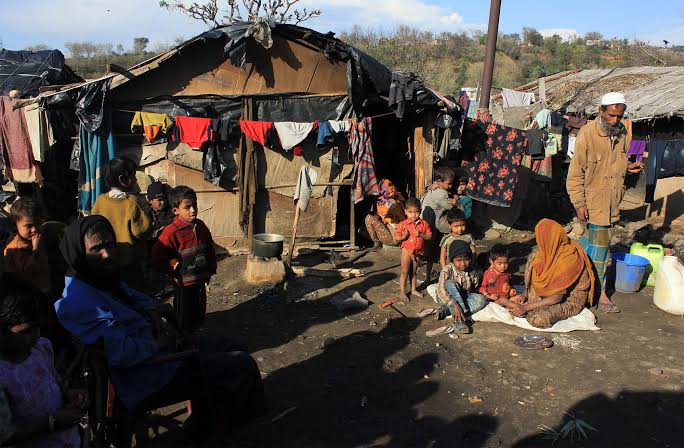
Over 8,000 foreign nationals, comprising 7,656 Rohingyas and 504 Bangladeshis, have been officially accounted for across Jammu and Kashmir, according to a government submission to the HLCDC. Digging into the district-wise breakdown, the Jammu region hosts the overwhelming share of Rohingyas at 6,737, while the Kashmir Valley leads in Bangladeshi residents with 458.
The committee, a four-member body, used the visit to hold extensive discussions on illegal immigration along border belts and the urgent need to bolster monitoring and surveillance frameworks. Sources indicated that the panel also interacted with civil society representatives actively engaged with the residents of these migrant camps.
According to a breakdown of criminal proceedings shared with the HLCDC, authorities in the Jammu region have registered 101 cases involving this demographic, implicating 179 men and 21 women. Conversely, the Kashmir Valley has seen 16 cases filed, which involve a starkly different gender ratio, 41 women and four men.
While officials clarified that the overall number of Rohingya settlements has risen only marginally over the last two years, their positioning near sensitive border zones remains a critical security headache. Security personnel have specifically flagged the alleged involvement of certain Rohingya individuals in illicit networks, including organized crime, drug smuggling, and human trafficking rings.
A senior police officer, quoted by The Tribune, drew attention to what he termed an ironic demographic disconnect. Although the Rohingya community is predominantly Muslim, the overwhelming majority of its members have established roots in the Jammu region, which has a Hindu majority, rather than in the Muslim-majority Kashmir Valley. The officer traced this migration pattern, explaining that many of these refugees initially entered India through Hyderabad before relocating to Jammu in significant numbers, particularly during the violent upheavals of 2012 and 2017. This geographic concentration in Jammu is viewed with heightened alarm due to the region’s proximity to the international border, amplifying potential security vulnerabilities.
Further adding to the concerns, the report detailed allegations by officials that some Rohingya women have been transported from Jammu to the Kashmir Valley by local Kashmiri men, often through informal marriage arrangements. Investigations into these incidents have reportedly uncovered instances of coercion and sexual exploitation. “Several such human trafficking cases have come to light in recent years,” a source stated by The Tribune said, warning that the increasing links between Rohingya settlers and drug-related offenses are also emerging as a significant worry.
The Union Ministry of Home Affairs constituted the HLCDC on May 26 with a broad mandate to study demographic alterations resulting from illegal immigration and other contributing factors. The committee is required to submit its report within a one-year timeframe. Crucially, its terms of reference include devising a legally sound, permanent, and time-bound operational system for the detention and deportation of undocumented immigrants residing in India.
The Rohingya are an ethnic Muslim minority native to Myanmar’s Rakhine province. Their mass displacement into India, particularly in 2012 and 2017, was triggered by severe military crackdowns and sectarian violence in their homeland.
